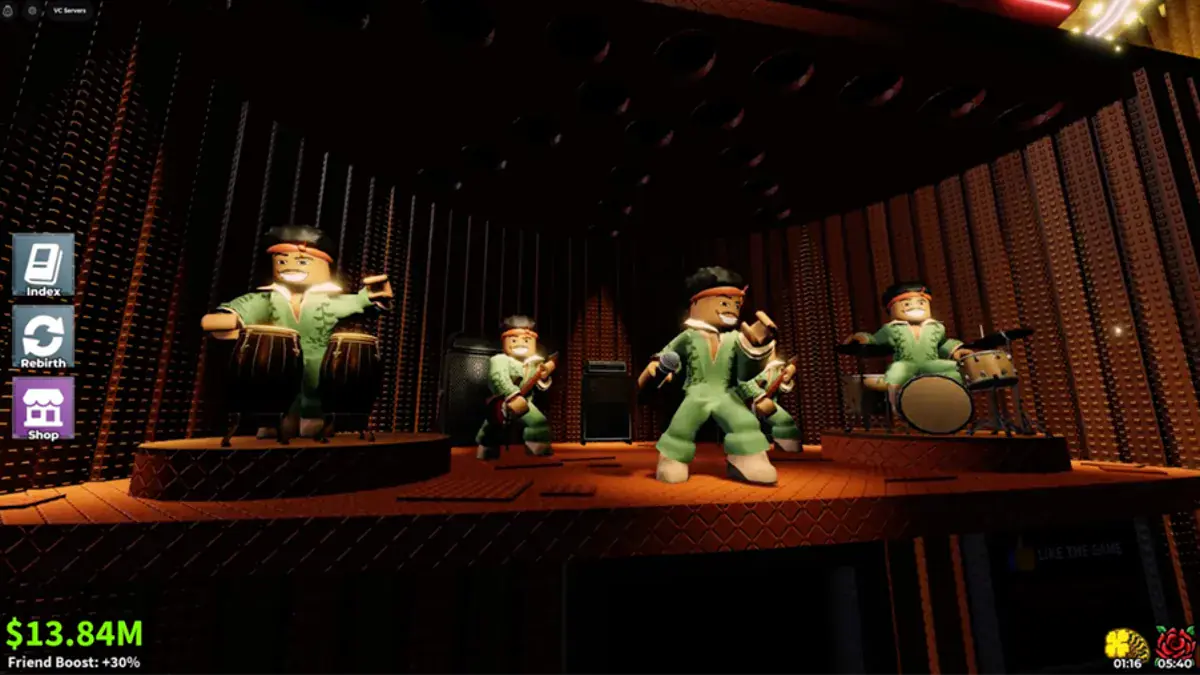
In January, Bruno Mars performed inside a Roblox experience called Steal a Brainrot. Not a bespoke Bruno Mars world or a branded venue built for the occasion, but a chaotic, creator-made game that was already pulling tens of millions of players. The show worked because the room was already full.
Compare that to the long line of virtual concerts with A-list celebs that have quietly underperformed over the last couple of years. Big names, huge production value in purpose-built spaces, yet there's still a disappointing flatness to the numbers. I've dropped into a few on my Quest and they were dead, huge stages with barely anyone stood in front of them.
That's the difference I keep coming back to: building your own world and expecting audiences to follow you into it, versus joining them in theirs.
The expensive instinct
When a brand decides to "do something in the metaverse", the instinct is almost always to build a shiny new destination, logo slapped everywhere. All that branding makes it feel like ownership and control, which is exactly why it's so tempting.
You might think that all this investment means you're going to draw huge numbers, and yet it's the least likely path to an audience. That's because you're not just asking people to join, you're also asking them to discover it and care about it before they ever reach the actual content. So most will never arrive.
Building in someone else's world
A few years ago we built the AI Wildlife Park, a Minecraft world aimed at 8 to 13 year olds that taught players about the ethics of artificial intelligence through play. It won an Anthem Award along the way!
We could have gone with a custom platform, something that looked slick and steeped in branding we fully controlled. We chose not to. We built inside Minecraft, because that's where millions of curious young minds already were, in a world they knew how to explore and play in. We never had to explain the mechanics. We inherited an entire literacy for free and could spend our energy on the story instead.
The classroom version, Minecraft Education, is bundled into the Microsoft 365 Education licences that schools already pay for. That means more than 40,000 school systems across 140 countries can jump straight into the world we built.
That for me is the core of designing meaningful digital experiences. You have to drop any entitlement over your content and release it into the wild for audiences to actually play with. That's when you see real growth.
The same idea kept showing up at SXSW
I'm not the only one thinking this way. A couple of threads from SXSW this year arrived at the same idea from completely different directions.
Crunchyroll talked about why they had been investing more heavily in gaming tie-ins. Their research showed the overlap between anime fans and gamers is huge, so they went all in on Minecraft, Roblox and Discord. Being on those channels (and yes, I'm calling Minecraft a channel now) lets them make authentic connections, because they're meeting their audience in the spaces they hang out.
Meow Wolf and Niantic framed it spatially. Their vision for the next era of immersive work is that physical places should be activated through story. It's not enough to just smear virtual content over the top of reality. The space is already meaningful, and our job is to switch it on rather than replicate it.
I haven't had a chance to see a Meow Wolf experience yet, but it's on my list and maybe it's where my development budget goes next year. Their approach felt like exactly what Extended Reality should be: digital that complements the physical world by adding elements that just aren't possible without it. I'd love to experience what that looks like IRL.
A few words of warning
Joining in isn't free. It isn't a shortcut. When you show up in someone else's world you must inherit and respect its culture and its rules. Think of it as being a guest in someone else's home. If you showed up to your friend's house and reorganised their stuff, they're not going to invite you back.
The same applies here. Get the tone wrong and the crowd that was your biggest asset becomes your sharpest critic, instantly and in public. If you enter those spaces with entitlement, you'll quickly learn that the only thing you actually own is your IP. Everything else belongs to the audience.
...and yet the trade-off is totally worth it if you get it right.
A better first question
I used to start experience briefs with "what should we build". Now, I start with "where is this crowd already standing and what can we give them that they'll genuinely enjoy".
So stop chasing the glamour of building something shiny and bespoke. Instead, start dreaming of how you bring those ideas and join in on the worlds your audience is already exploring.
Design for the room that is already full.
Originally published on my Substack.